Your first release is a measurement system
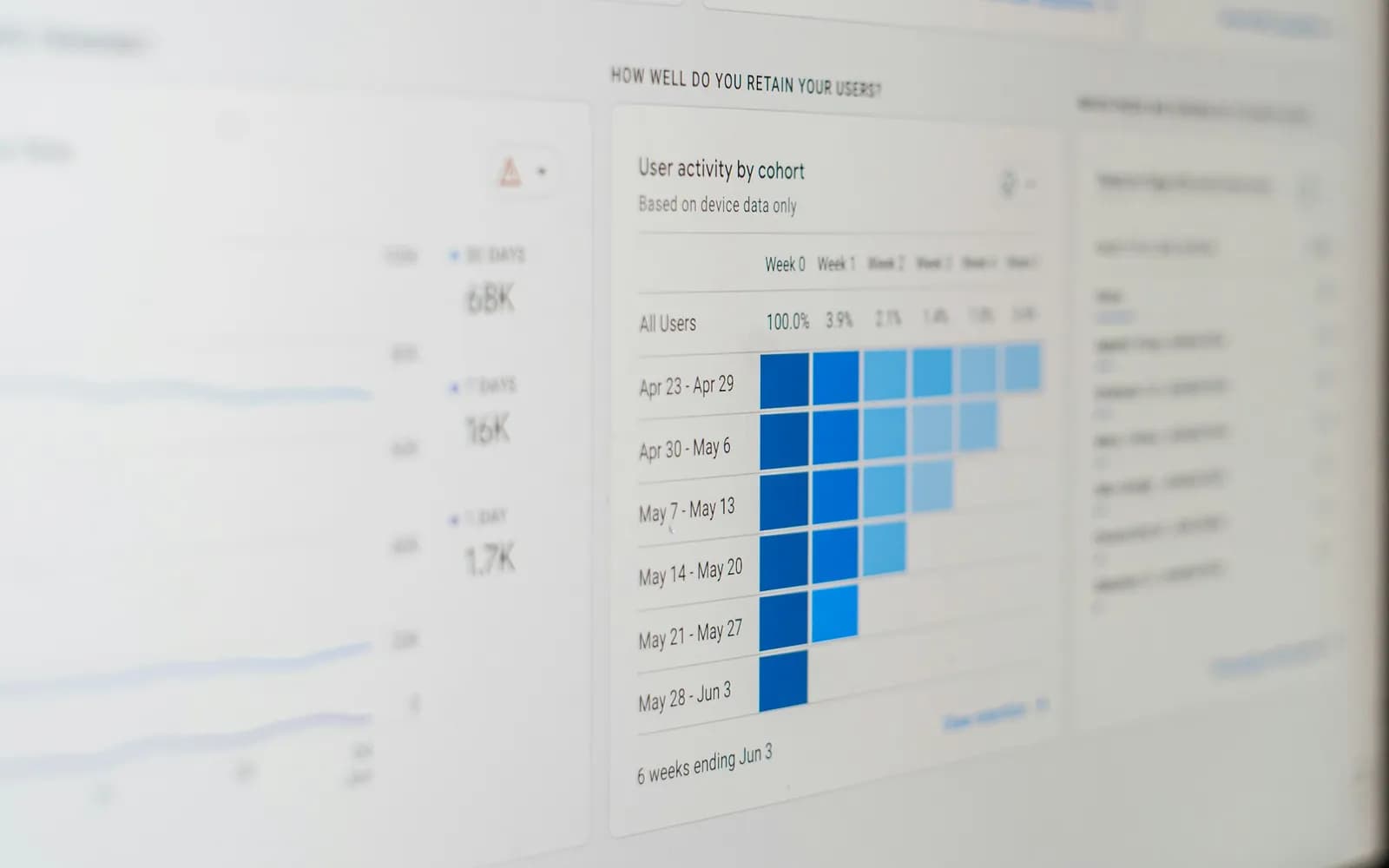
`A launch is often treated as the finish line of product work and the starting line of marketing. The product goes live, the campaign switches on, and everyone waits for the numbers. That division hides a practical problem: the decisions that make growth measurable were already made while the product was being built.
If the landing page promises one outcome but onboarding asks people to do something else, a campaign cannot fix the gap. If your analytics count registrations but cannot tell whether anyone completed the task they came for, more traffic makes the dashboard busier without making the business easier to understand.
At Entroform, we approach the first release as a measurement system. It should deliver one useful outcome and give the team enough evidence to decide what to improve next.
Start with the moment of value
Before listing features, finish this sentence: a person arrives with this problem, does this action, and leaves with this result. Keep the result observable. "Feels more productive" is difficult to measure. "Creates a proposal they can send to a client" gives the team something concrete to inspect.
For a booking service, the moment might be a confirmed appointment rather than an account creation. For a business tool, it might be the first completed workflow rather than the first login. Choose the event that comes closest to the customer's reason for showing up.
This definition is also a design constraint. Each extra screen before that event needs to earn its place. Ask whether you need the information now, whether a sensible default exists, and whether the person can experience value before committing to a longer setup.
Write the evidence plan beside the scope
A short event plan is more useful than an exhaustive tracking wish list. For each event, write its exact trigger, the properties it needs and the decision it will support. A small release might need these four signals:
- A qualified visit, with campaign attribution where available.
- A meaningful start, such as creating the first project.
- A completed outcome, such as sending that first proposal.
- A return to repeat the workflow within a useful period.
Define what counts once. A button click is not necessarily a completed action: a request can fail after the click. Record the successful outcome where it is confirmed, and test duplicate handling before trusting the count.
Collect only what the decision needs. An event that says a proposal was sent does not need the proposal's contents. Keep personal data out of analytics properties where possible, and respect the consent choices relevant to the deployment.
Read a funnel as a set of questions
Imagine 100 people arrive from a campaign, 30 start setup and six complete the main task. Those are illustrative numbers, not a benchmark. They suggest questions, not a verdict.
Are the visitors the intended audience? Does the page describe the product clearly? Does setup require information people do not have yet? Is the completion event firing correctly? A low completion rate can come from a product problem, an acquisition problem or a broken measurement plan. Looking at one percentage will not tell you which.
Pair the event trail with conversations and direct observation. Ask a few people to work through the task while you watch. Read support messages. Reproduce the flow on a slow phone connection. A recording of hesitation at a confusing field can be more useful than another dashboard chart.
Ship the next experiment with an owner
Once you can see the path to value, choose one bottleneck and one change. Write down what you expect to happen, which signal would support that expectation, how long you will observe it and who will decide what comes next.
For example, if people abandon setup before they can preview a result, test moving the preview earlier. Do not redesign the pricing page in the same experiment unless the two changes are inseparable. Otherwise, an improvement will be hard to attribute and a failure will teach you little.
For small audiences, avoid declaring a winner from a handful of conversions. Use the numbers as directional evidence, combine them with qualitative feedback and keep the cost of reversing the change low. The purpose is a better decision, not a ceremonial claim of certainty.
A useful handoff includes the ability to learn
A first release should arrive with the product, the event definitions, a tested reporting view and a named next review. Include known gaps: what is not tracked, what can be counted twice, and which conclusions the current volume cannot support.
That is why engineering and growth belong in the same conversation from the brief. The engineer needs to know what outcome matters. The marketer needs to know what the product can reliably deliver. The founder needs a shared view of what the next week is trying to prove.
A release that answers those questions gives you a practical starting point: a useful product, a visible path to value and a reasoned next step. That is a stronger foundation for growth than a longer feature list.
One last habit is worth keeping. At the end of each review, write down the one thing you expected to learn and whether the evidence actually answered it. Over a few weeks that short log becomes the most honest record of how your product is changing, and it keeps the conversation about evidence rather than opinion.
If you want help planning a measurable first release, see our software development services or look at the products in our case studies.
Frequently asked questions
What is a measurement system for a first release?
It is a first release built so that you can see where users get value and where they get stuck. It has a defined moment of value, a short list of tracked events and a regular review.
What should I track in an MVP?
Track a qualified visit, a meaningful start, a completed outcome and a return visit. Keep personal data out of analytics where you can.
How many users do I need to trust the numbers?
Small audiences give directional evidence only. Combine the numbers with conversations and watching people use the product before you decide.